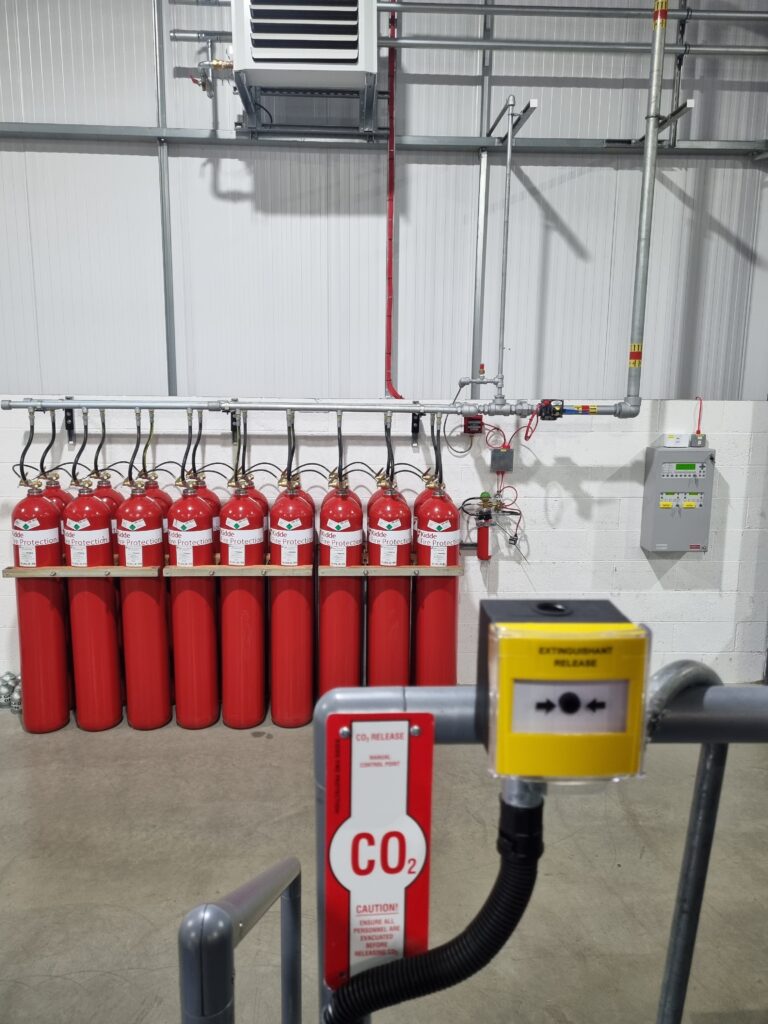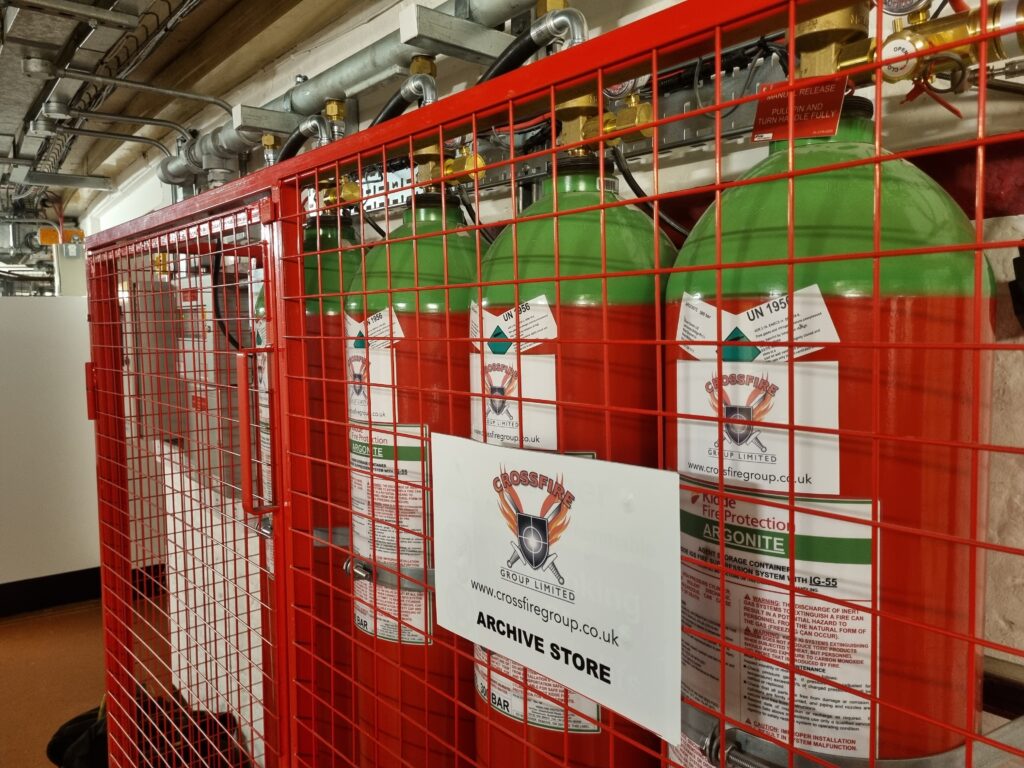
Crossfire Group Ltd specialise in the design and installation of fire suppression systems, and offer our clients expert guidance and support in selecting the right system for you.

Our teams work closely with clients to understand operational requirements, tailoring a bespoke system to your exact needs. We deliver two different types of fire suppression systems comprising of ‘Inert’ and ‘Chemical’ systems.
Inert Systems

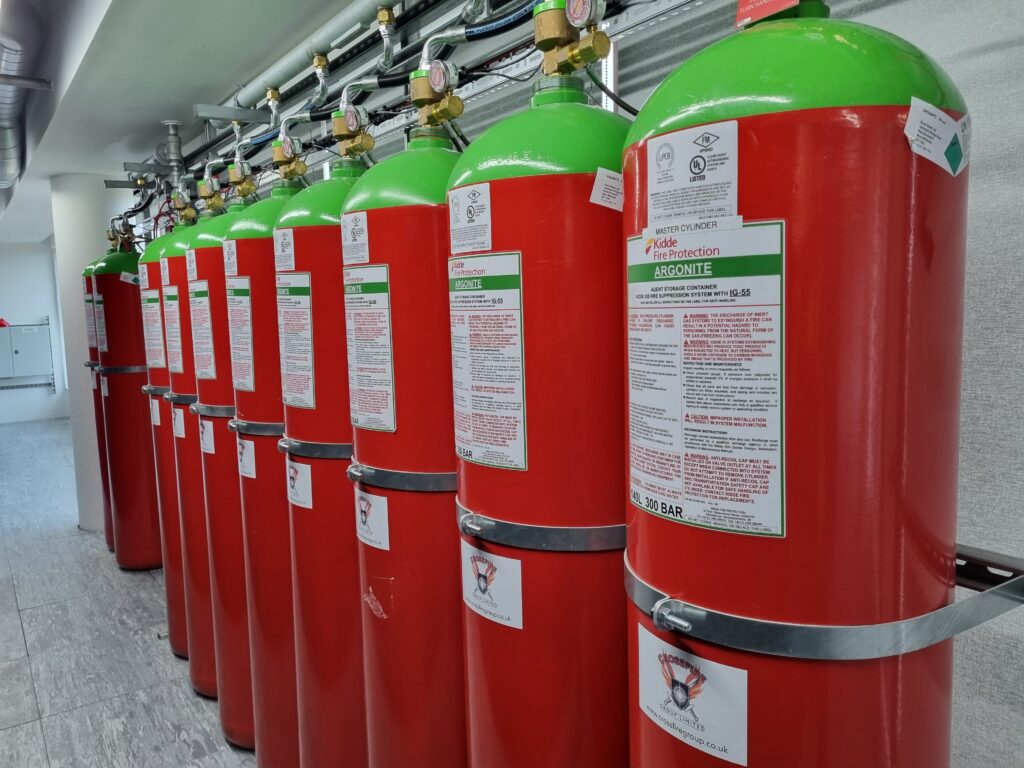
Inert Gas Fire Suppression systems work by removing enough Oxygen in the room to extinguish a fire, whilst leaving enough for humans to survive in. Inert gases are colourless and odourless, safe for people, the environment and cause no damage to property or data. Inert Gas systems include:

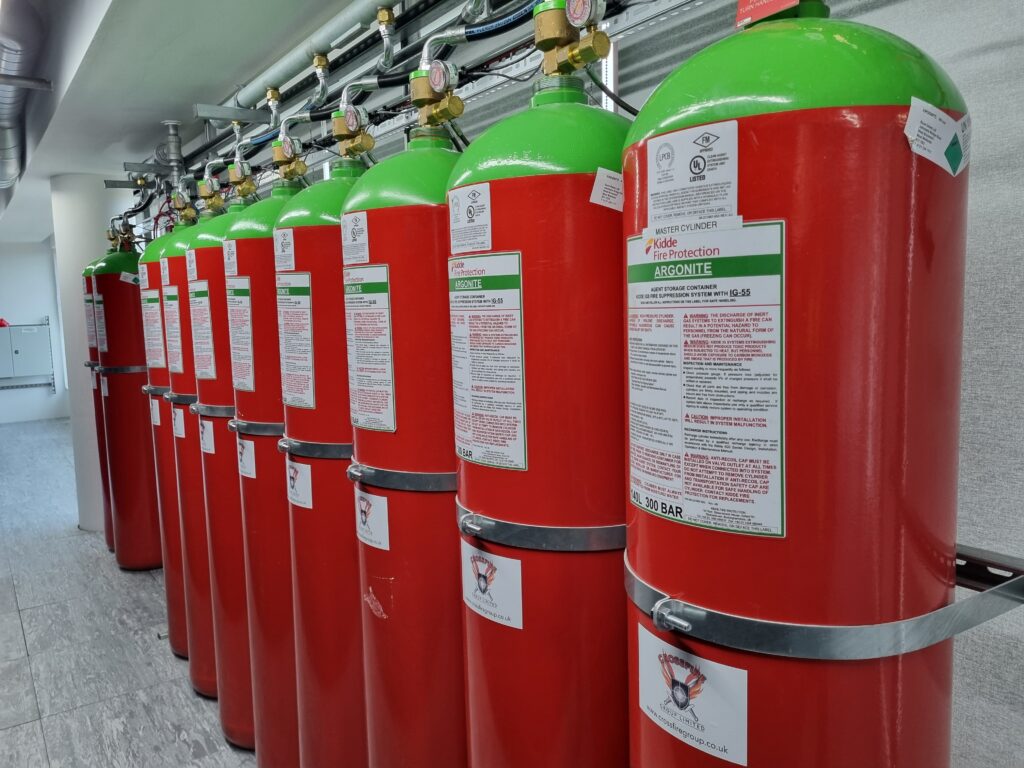
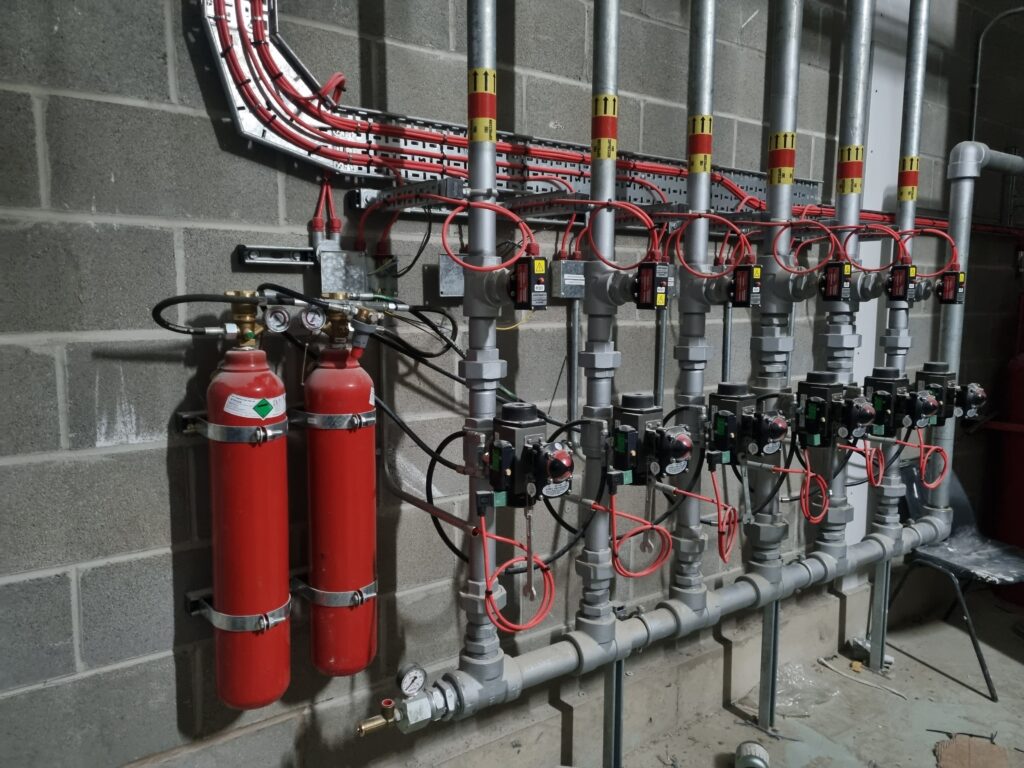
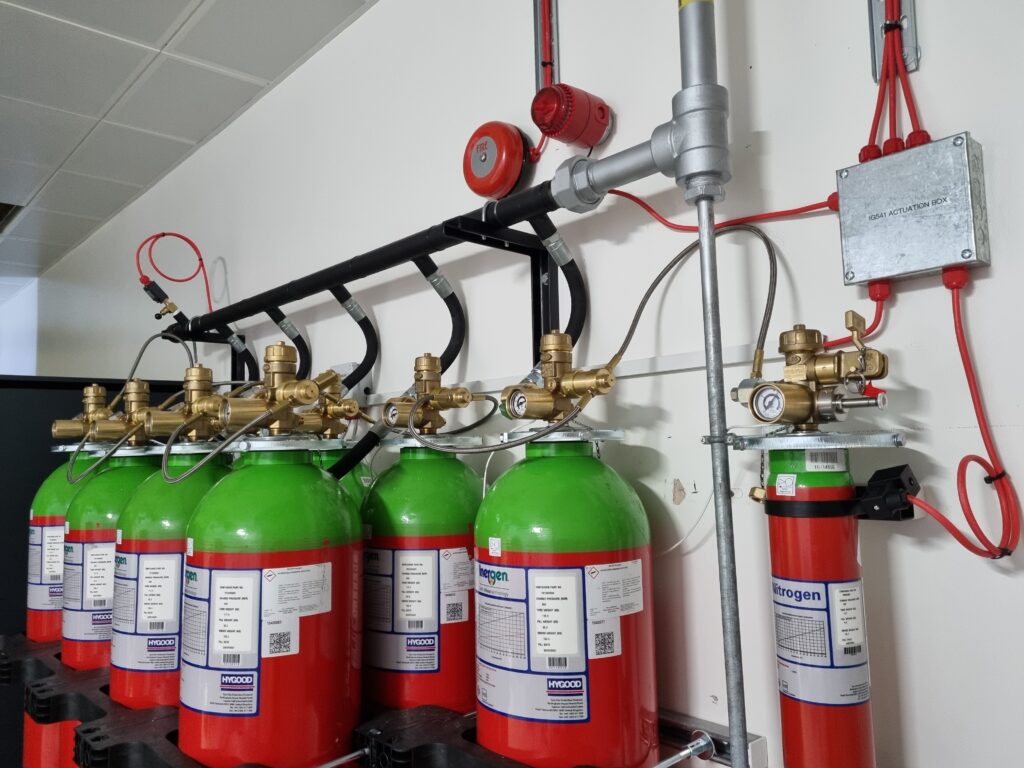
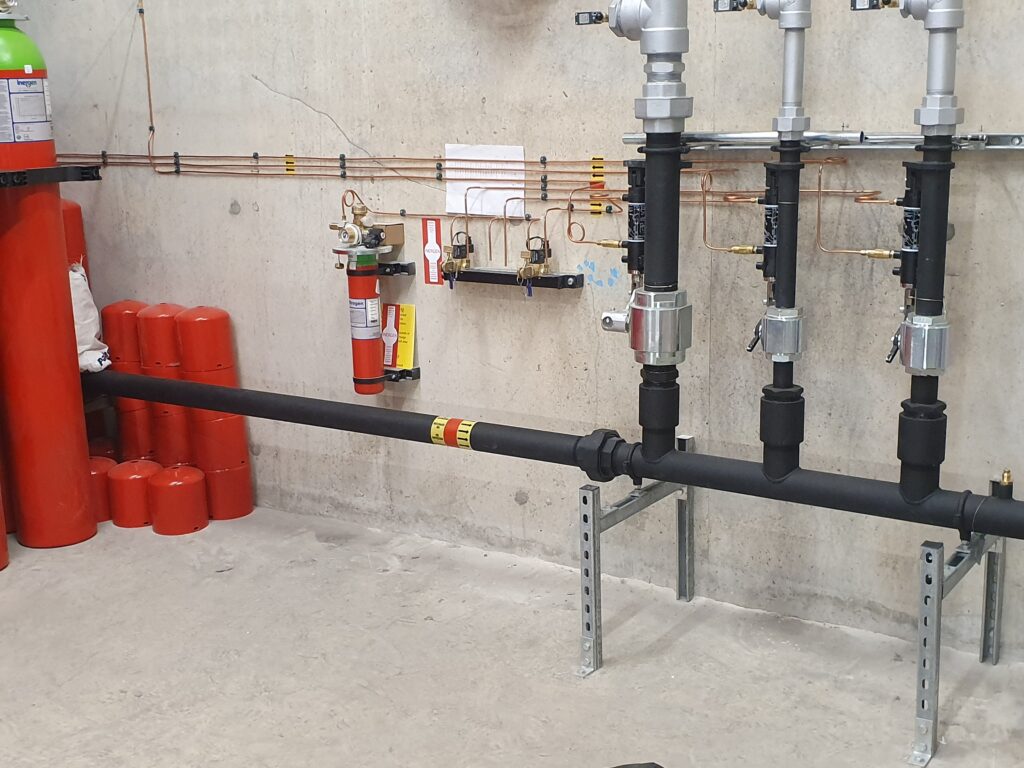
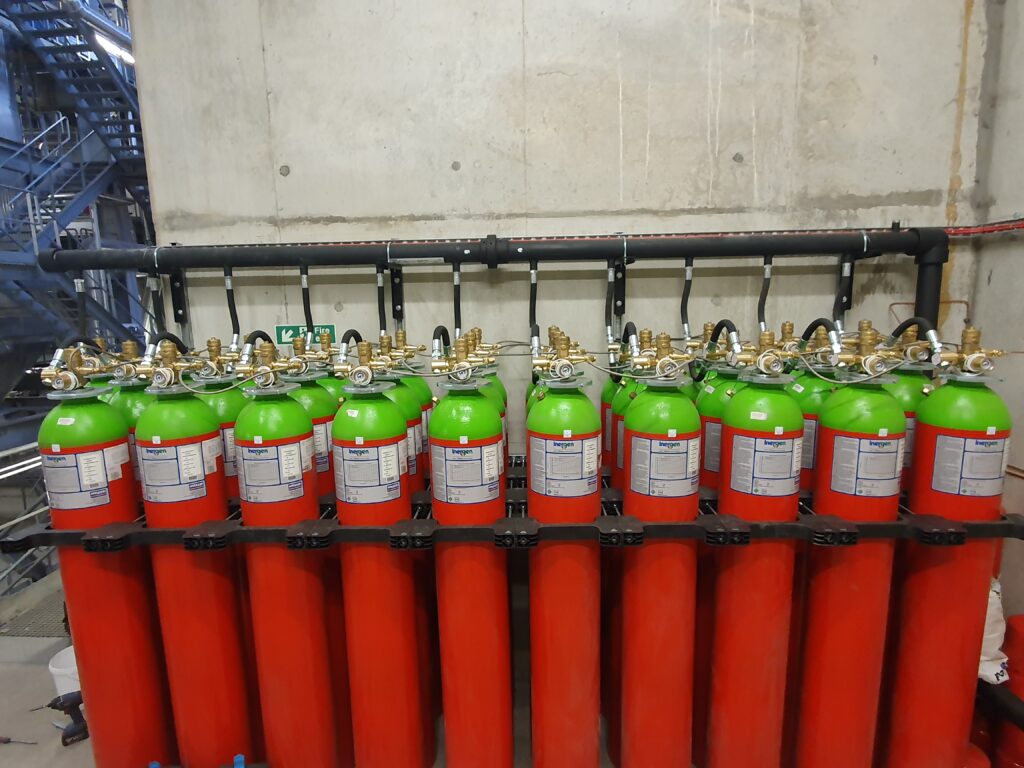
INERGEN (IG541) – is a rapid extinguishing agent which uses naturally occurring gases, Argon, Nitrogen and Carbon Dioxide (chemical compound designation IG541). It provides a suitable suppression across occupied buildings, as it operates perfectly safe for human exposure at the system design concentrations. It is stored at 300 BAR pressure as a gas in standard size cylinders. The INERGEN system is discharged through a piping network into the protected area.

INERGEN systems extinguish a fire by reducing the oxygen content from approximately 21% found in ambient air to 15%, a level at which most combustible materials will not burn. Simultaneously with this, carbon dioxide is released to assist the human body to inhale and absorb oxygen, ensuring a safe level of oxygen exposure is maintained.

Benefits:

Odourless
Colourless
Leaves no deposits, ensuring building contents remain undisturbed
Non-corrosive
Doesn’t require professional sealing to retain the design concentration of the system
Chemical Systems

Dry chemical fire suppression systems distinguishes fires rapidly, and offers total coverage, making them the industry standard for heavy equipment applications. They provide fire protection against class A (debris), class B (fuel) and Class C (electrical) fires. This system is effective by flooding a volume of space, such as a vehicle engine compartment, with a firefighting agent to suffocate the flame. Chemical systems include:

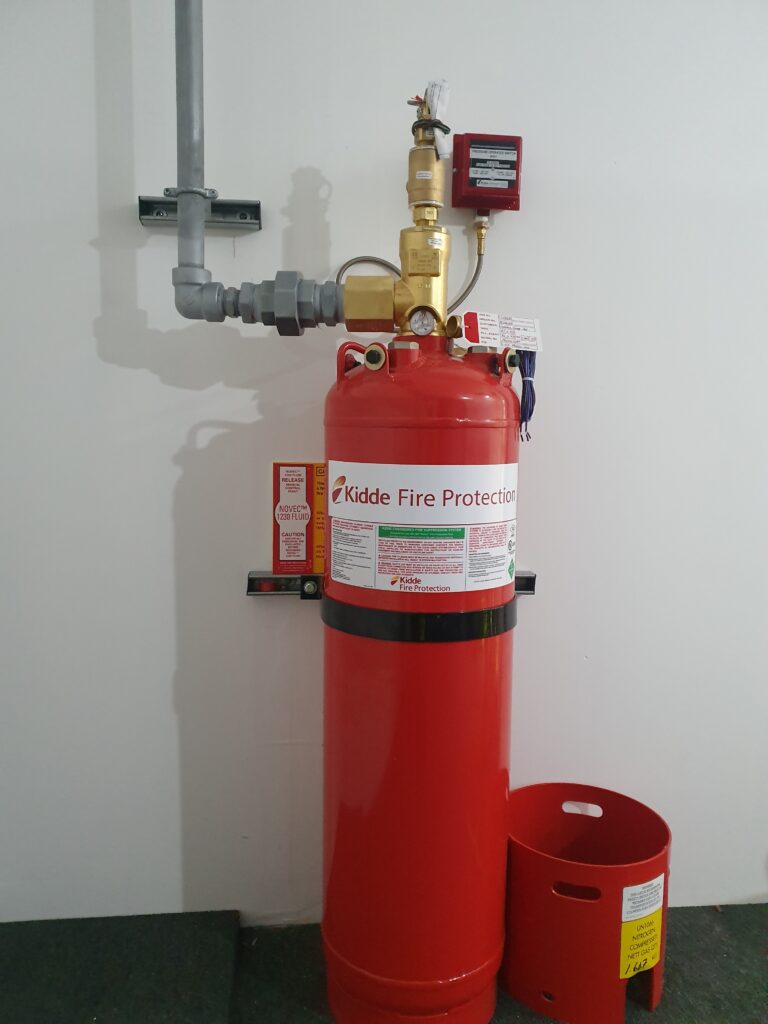
FM-200 Fire suppression – FM-200, also known as HFC-227ea, is a clean agent fire suppressant for Class A, B, and C fires and meets NFPA Standard 2001 Clean Agent Fire Extinguishing System. Clean agents are fast and effective in suppressing fires, safe for use in occupied areas, and do not leave any residue.

FM-200 suppresses a fire by disrupting the fire triangle (heat, oxygen, and a fuel source). By removing one of the elements within the fire triangle, the fire is extinguished. Clean agent fire suppression systems can achieve fire extinguishing concentrations in 10 seconds or less. Leaving no residue or deposits behind, the FM-200 system is ideal for areas with equipment, electronics and machinery.

Benefits:

Safe for use in occupied areas
Leaves no deposits or residue, remaining safe for equipment, electronics and machinery
Smaller or fewer cylinders required
Additional Systems

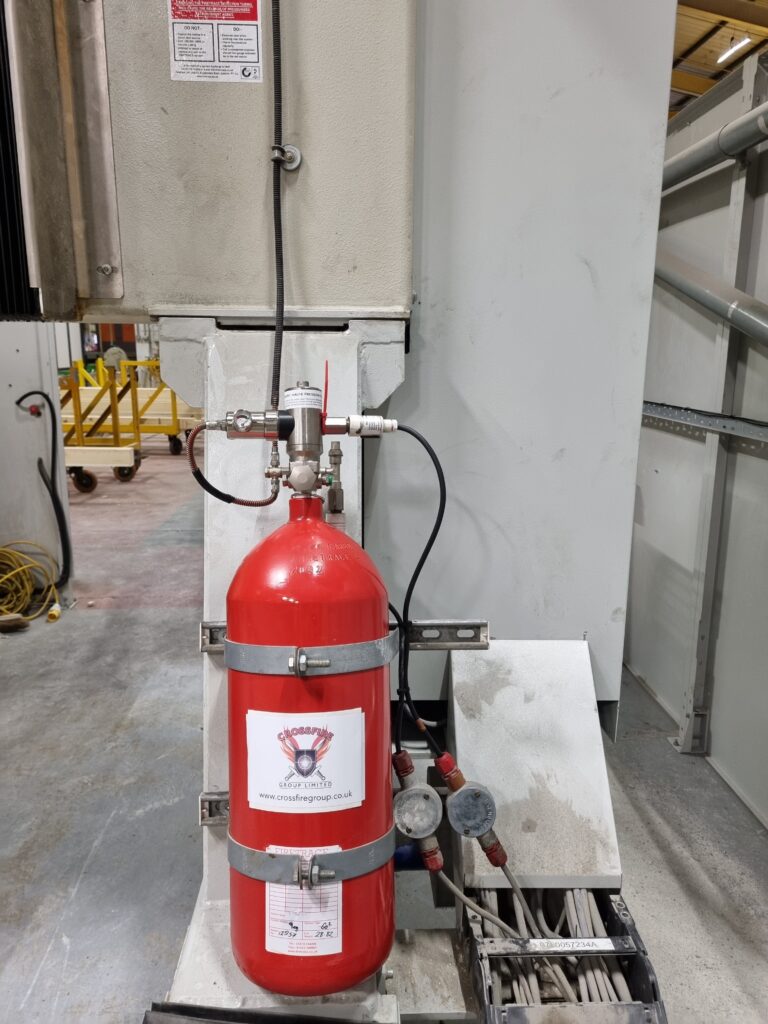
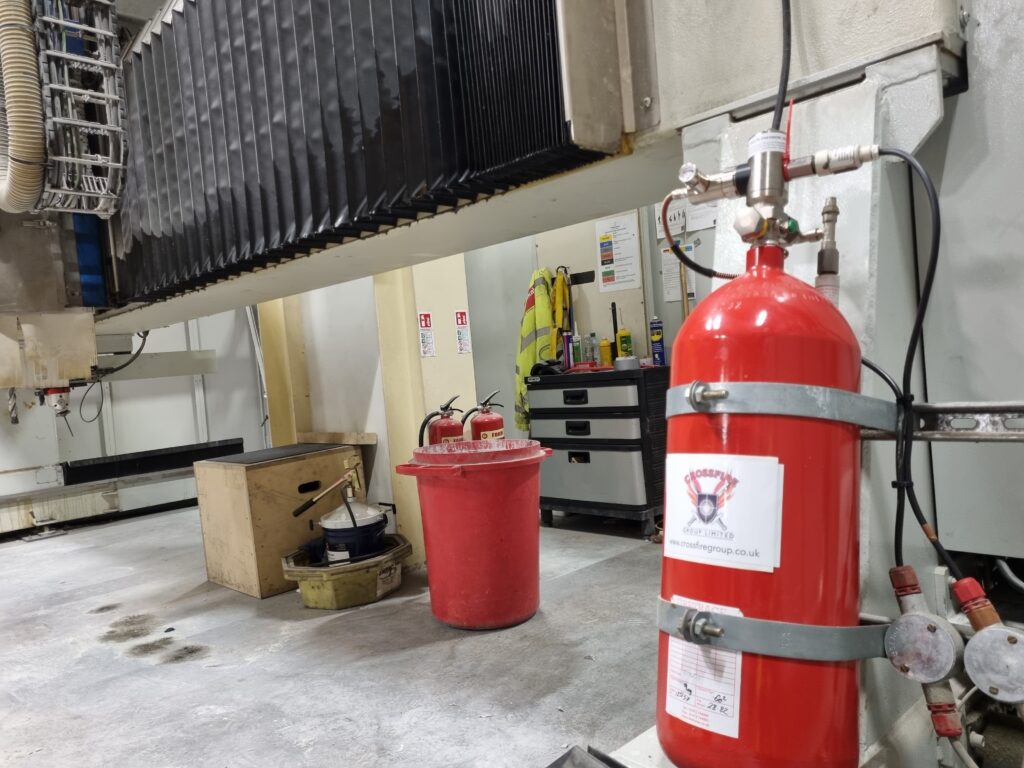
Firetrace – a self-activating fire suppression system without the need of any external power supply. It is made up of flexible patented linear heat/flame detection tubing, that can be applied to almost any object/application, regardless of size.

A cost effective, robust and versatile fire suppression system that is absolutely safe against malfunction. It can be provided as a direct system to extinguish the closest point of the fire and Indirect system to extinguish into a protected area.

Menu